The world of financial trading offers countless opportunities, but it also comes with its fair share of uncertainty. Among the many instruments available to modern traders, Contracts for Difference (CFDs) have gained significant popularity for their flexibility and accessibility. They allow individuals to speculate on price movements across a wide range of markets without owning the underlying assets. While this flexibility is attractive, it also means traders must approach the market with discipline and a strong understanding of risk.
Successful CFD traders know that profitability is not only about finding winning trades. It is equally about protecting capital and managing losses effectively. Markets can move quickly and unpredictably, and without a clear risk management strategy, even experienced traders can face significant setbacks.
Understanding the Nature of CFD Risk
CFDs are leveraged financial instruments, which means traders can open positions larger than their initial deposit. This leverage can amplify potential profits, but it also increases the size of potential losses. For this reason, understanding how leverage works is one of the first steps toward effective risk management.
When markets move in the expected direction, leverage can accelerate gains. However, when markets move against a position, losses can accumulate quickly. This dynamic requires traders to remain vigilant and maintain strict control over position sizes and exposure levels.
Read More: Boost Your Investments: Using MTF through a Demat Account
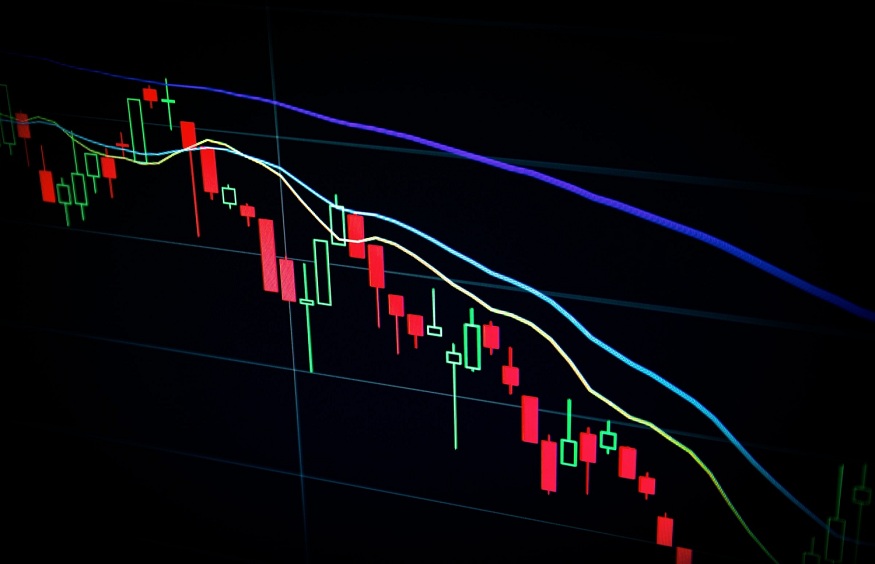
Market volatility also plays a major role in CFD trading risk. Prices can react to economic announcements, geopolitical developments, or sudden changes in investor sentiment. Even experienced traders cannot predict every movement. Recognising that uncertainty is a normal part of trading helps individuals prepare for both positive and negative outcomes.
Setting Clear Risk Limits Before Trading
One of the most effective strategies for managing CFD risk is defining limits before entering a trade. This involves determining how much capital a trader is willing to risk on a single position and sticking to that rule consistently.
Many experienced traders follow a simple principle: never risk more than a small percentage of total trading capital on any one trade. By keeping individual trade risk low, traders ensure that a series of losing trades will not wipe out their accounts. This approach promotes longevity in the market and allows traders to recover from setbacks.
Stop-loss orders are another essential risk control tool. These orders automatically close a trade when the price reaches a predetermined level, preventing losses from growing beyond acceptable limits. Stop-loss levels should be chosen based on logical market analysis rather than emotional reactions.
Diversifying Trading Exposure
Diversification is a widely recognised principle in investing, and it also applies effectively to CFD trading. Instead of focusing on a single market or asset class, traders can spread their exposure across multiple instruments. This reduces the impact of a poor-performing trade on the overall portfolio.
CFDs allow traders to access a broad selection of markets, including indices, commodities, currencies, and stocks. By participating in different sectors, traders create a more balanced approach that can withstand fluctuations in individual markets.
Read More: What are Options Contracts, and How Do “Call” and “Put” Options Function?
When selecting a trading platform or brokerage, reliability and transparency also contribute to effective risk management. Many traders choose established firms such as ADS Securities because access to stable technology, reliable execution, and clear trading tools can support more disciplined trading decisions.
Maintaining Emotional Discipline
Risk management is not only about numbers and technical tools. Psychology plays a significant role in trading outcomes. Emotional reactions often lead traders to make impulsive decisions that increase risk unnecessarily.
Fear and greed are two emotions that commonly influence trading behaviour. Fear can cause traders to close positions too early, missing potential gains. Greed, on the other hand, may lead traders to hold positions longer than planned or take on excessive risk in pursuit of larger profits.
Establishing a well-defined trading plan helps reduce emotional interference. A trading plan outlines entry rules, exit strategies, and risk parameters in advance. By following these guidelines consistently, traders can avoid making decisions based purely on short-term market fluctuations.
Continuously Reviewing and Improving Strategies
Risk management is not a one-time effort. Markets evolve, economic environments change, and trading strategies must adapt accordingly. Successful traders regularly review their performance to identify strengths and weaknesses.
Keeping a trading journal can be a valuable practice. By recording the reasoning behind each trade, the risk involved, and the eventual outcome, traders gain insight into their decision-making patterns. Over time, this information helps refine strategies and reduce repeated mistakes.
Learning from both winning and losing trades is essential. A profitable trade does not necessarily mean the strategy was perfect, just as a losing trade does not always indicate poor analysis. Evaluating the process behind each decision allows traders to focus on improving long-term consistency.
Conclusion
Trading CFDs presents exciting opportunities for individuals who want to participate in global financial markets. The ability to access multiple asset classes and use leverage can make CFD trading a powerful tool for experienced and aspiring traders alike. However, these advantages must always be balanced with careful attention to risk management.
Successful traders understand that protecting capital is just as important as pursuing profits. By setting clear risk limits, diversifying exposure, using protective orders, and maintaining emotional discipline, traders can navigate market uncertainty with greater confidence. These practices create a strong foundation that supports sustainable trading over time.