A car accident, theft, or unexpected damage can be stressful enough without having to worry about paperwork. Knowing which documents are required for a car insurance claim can make the process smoother and help your insurer assess and settle the claim efficiently.
Whether you have comprehensive car insurance, third-party car insurance, or another type of motor insurance policy, keeping the necessary documents readily available can save time during an already difficult situation.
Why Are Documents Important for a Car Insurance Claim?
When you file a car insurance claim, the insurer needs to verify important details such as the policyholder’s identity, vehicle ownership, nature of the incident, and extent of the damage. The required documents provide evidence that supports your claim.
Submitting complete and accurate paperwork can help avoid unnecessary delays. The exact documents may vary depending on the insurer, type of claim, and circumstances of the incident.
Documents Generally Required for a Car Insurance Claim
Here are the commonly required documents you should keep handy when filing a claim.
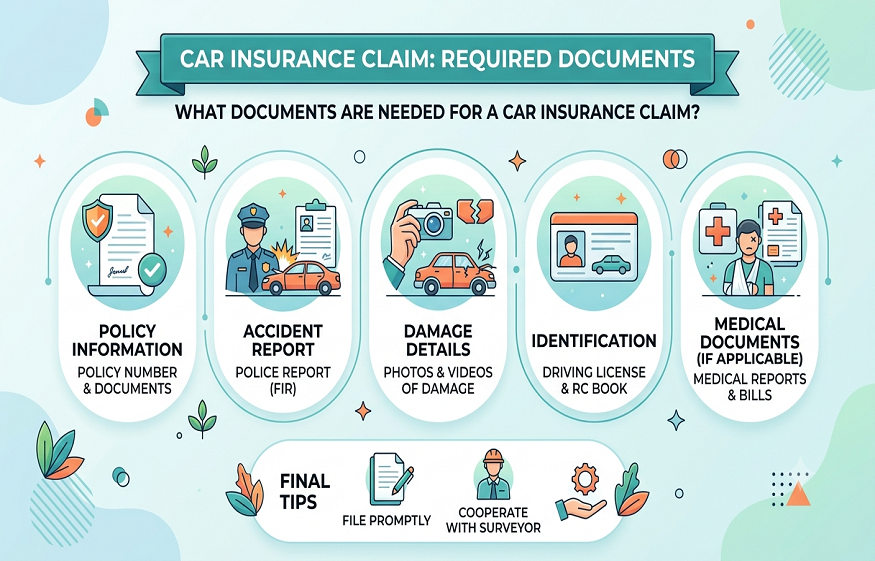
1. Car Insurance Policy Document
Your insurance policy document contains important information such as your policy number, vehicle details, coverage, policy period, and insured details. It helps the insurer verify that the policy was active when the incident occurred.
If you have comprehensive car insurance, the policy document is particularly useful for understanding whether the damage or loss falls within the scope of your coverage.
2. Claim Form
A duly completed and signed claim form is generally required to initiate the claims process. The form usually asks for details about the accident, damage, date and time of the incident, location, and other relevant information.
Make sure the information provided is accurate and consistent with the circumstances of the incident.
3. Registration Certificate (RC)
The vehicle’s Registration Certificate establishes ownership and provides details about the insured vehicle. A copy of the RC is commonly requested during the claims process.
Ensure that the registration details match the information mentioned in your car insurance policy.
4. Driving Licence
A valid driving licence of the person driving the car at the time of the incident may be required. The insurer may verify whether the driver was legally authorised to drive the vehicle when the accident occurred.
Driving without a valid licence can affect the admissibility of a claim, depending on the policy terms and applicable regulations.
5. First Information Report (FIR)
An FIR may be required in cases involving theft, major accidents, third-party injury or property damage, or other situations where a police report is relevant.
For minor accidents where there is no third-party involvement, an FIR may not always be necessary. However, requirements can differ between insurers and claim circumstances.
6. Repair Estimates and Bills
If your vehicle is being repaired, the insurer may ask for repair estimates, invoices, or bills from the garage. These documents help determine the cost of repairs and the amount payable under the policy.
If you have cashless car insurance repair facilities available through your insurer’s network garages, the process may involve direct settlement between the insurer and the garage, subject to the policy’s terms and applicable deductions.
7. Photographs and Videos of the Damage
Photos and videos of the accident scene and vehicle damage can provide useful evidence when assessing a claim. Take clear photographs from different angles, including the damaged portions of the vehicle and, where appropriate, the surrounding accident scene.
It is best to capture this evidence before the vehicle is repaired or altered.
8. Other Documents, Depending on the Claim
Additional documents may be required depending on the type of claim. For example, a theft claim may require the vehicle’s original keys, police documentation, and other supporting papers. A claim involving third-party damage or injury may require additional legal or police documents.
Your insurer may also request bank details or other information required to process the claim payment.
Documents Required for Different Types of Car Insurance Claims
The paperwork can vary depending on the nature of the claim.
| Type of Claim | Commonly Required Documents |
| Accident/Own Damage | Policy document, claim form, RC, driving licence, repair estimates/bills, photographs |
| Third-Party Claim | Policy details, claim form, FIR/police documents, driving licence, RC and relevant third-party documents |
| Theft Claim | Policy document, claim form, FIR, RC, vehicle keys and other documents requested by the insurer |
| Natural Calamity Damage | Policy document, claim form, RC, photographs/videos and repair-related documents |
This table is a general guide. Your insurer may ask for additional documents depending on the circumstances and policy conditions.
How to Make the Car Insurance Claim Process Easier
Keeping your insurance and vehicle documents organised can make a significant difference when you need to file a claim. Store digital copies of your policy, RC, driving licence, and other important documents in a secure location that you can access easily.
After an accident, inform your insurer as soon as possible and follow its instructions regarding inspection, repairs, and documentation. Avoid making repairs before the insurer’s inspection when an inspection is required, unless immediate action is necessary for safety reasons.
Also, be truthful and consistent when describing the incident. Providing incorrect or incomplete information can create complications during claim assessment.
Keep Your Documents Ready Before You Need Them
Car insurance is most valuable when you can rely on it during an unexpected event. While having comprehensive car insurance can provide broader protection against several risks, understanding the claims process is equally important.
Before you need to make a claim, check your policy documents and understand the coverage, exclusions, deductibles, claim procedures, and documents your insurer may require. Keeping everything organised can help you navigate the process with greater confidence when an accident or loss occurs.
Remember that claim approval and settlement depend on the specific policy terms, coverage, documentation, and circumstances of the incident. Always check with your insurer for the latest requirements before submitting a claim.